Limited time · 46% off
The offer a Tuesday meeting can defend
Buy it now only for $79.99 (from $146.88)
A 45-page handbook for specialists who already do the work and still do not have a priced product. You leave with a job line, a committee sentence, a client's number, and a first week you can finish. Instant digital access. Nothing ships.
Open it on one real offer this month. If it does not help you see a next step you can actually run, message support within 30 days for a full refund.

Who this is for
Consultants who bill hours
You already deliver the method. You want a product that can sell while you are in someone else's meeting.
Agency operators with a trapped process
The method lives in Slack. A champion cannot repeat it on Tuesday because it has no edges.
Specialists who have been almost ready for a quarter
The folder is named Product. The deck keeps growing. No client has named a price.
Skip this if overdue invoices are the fire, if you want ads that print a pipeline, or if you will not talk to five humans who do not already like you.
What you get
- A market-validation checklist so you stop interviewing friends
- The Tuesday Test: committee sentence, client price, budget-owner email
- Pricing pages that separate your number from a client's number
- A product-structure template and a sales-page formula you fill
- A seven-day first-week plan with named conversations
- A pre-launch playbook plus a tickable quality list
Use it today
01Name the job they are hiring
Not your category. The job. If you cannot say it in one line, you have a topic.
02Write the committee sentence
What it does, for whom, what it replaces, what it costs. Read it out loud. Cut until you do not wince.
03Book five conversations
Write the names tonight. Send the first ask before you sleep. Friends who like you do not count.

A B2B buyer is not hunting a feeling. They are hunting a sentence they can say out loud without looking careless.
How a brain actually buys a B2B offer
The stall is not laziness. It is four well-studied loops.
Most launch pages shout that you are leaving money on the table. That shout is the same sting that makes a specialist hide in research. This book was written around how people decide under social risk. None of it claims a lab tested these files. It claims the pages are shaped like the loops that keep an offer unpublished.
01You cannot price what you built with your own hands
Norton, Mochon, and Ariely named the IKEA effect: people overvalue things they assembled. Your offer feels expensive to you because you remember every draft. A client does not. The book does not ask you to become cold. It asks you to let someone who did not build it name a number first, then write yours against that number instead of against your pride.
02The real customer is the sentence they will repeat on Tuesday
Philip Tetlock's accountability work is blunt. When people expect to justify a choice, they pick the option they can defend, not the option they privately like. A B2B buyer is not a mood. They are a person who has to speak in a meeting. The committee sentence is one line they can say without looking reckless. If you cannot write it, they cannot buy.
03An unknown launch feels worse than a small known test
Ellsberg's paradox: people would rather take a known risk than an unknown one, even when the unknown might pay more. "Will this sell" is an unknown. Five conversations with a script is a known. The book trades the fog of a big launch for a test you can finish this week. Known is slower to romanticize. Known is what a nervous system will actually start.
04Easy to say is treated as true
Alter and Oppenheimer showed that fluent statements feel more true than clumsy ones. A B2B buyer does not run your spreadsheet in the room. They run a sentence. If the sentence is hard to say, the offer feels risky. If it is easy, it feels considered. The committee sentence is not decoration. It is a fluency test for a room you will not be in.
Who this is for
Built for people who can already do the work
If you still need a skill, this is the wrong book. If you have the skill and no priced product, this is the one. Buy it if the first list sounds like your week. Skip it if the second list is the actual fire.
Buy this if
Consultants who bill hours
You already deliver the method in client work. You want a product that can sell while you are in someone else's meeting.
Agency operators with a trapped process
The method lives in your head and in Slack. A champion cannot repeat it on Tuesday because it has no edges.
Specialists who have been "almost ready" for a quarter
The folder is named Product. The deck keeps growing. No client has named a price.
Operators who can name the job, not the number
You know what the buyer is hiring. You still cannot say a price out loud without flinching.
Skip this if
Overdue invoices are the fire
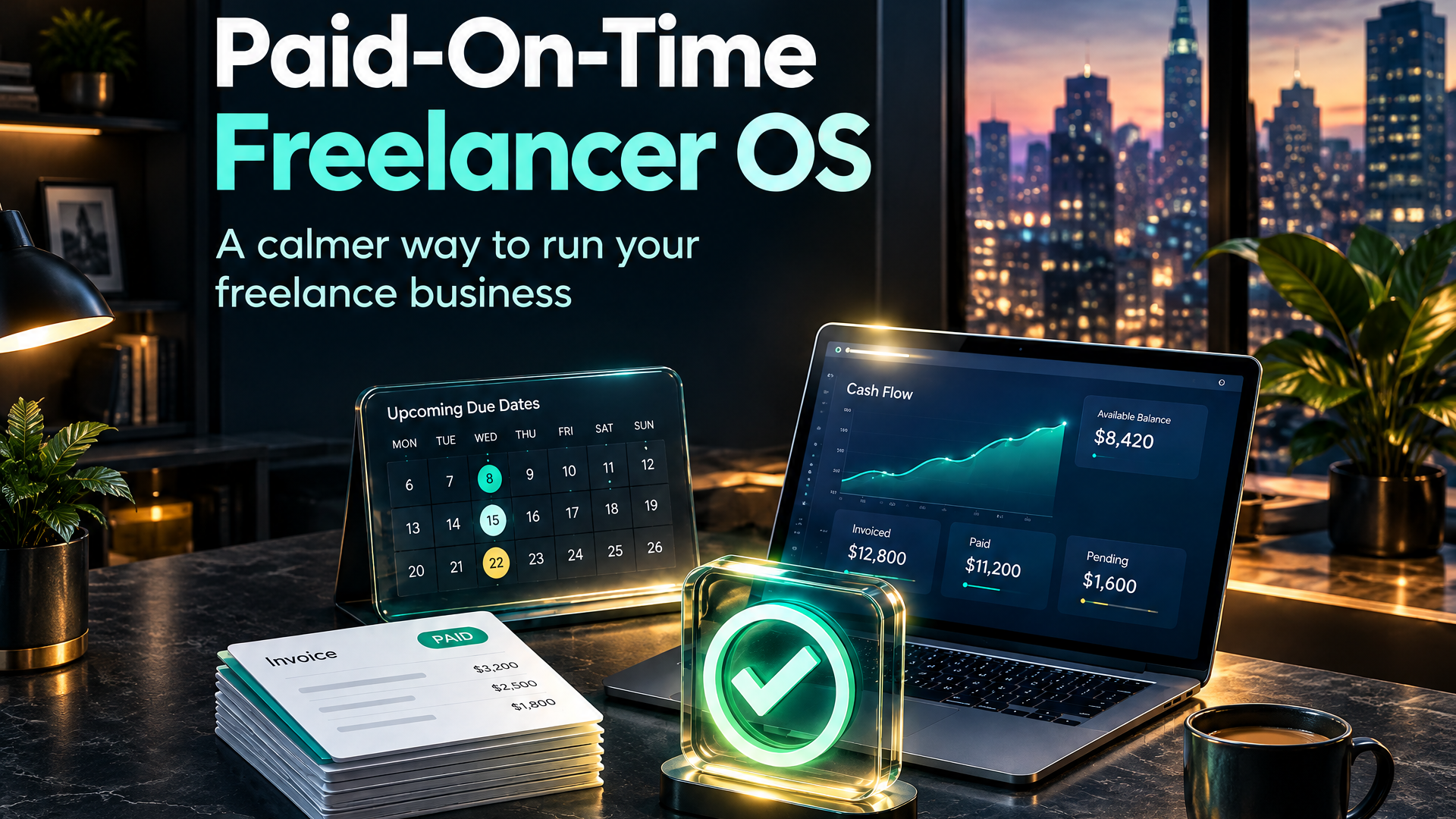
That is Paid-On-Time Freelancer OS at $57. Pipeline, deposits, follow-up. Different job. Buy that one first.
You want ads that print a pipeline
This is a handbook. No media buying, no guaranteed clients, no done-for-you agency.
You will not talk to five humans who do not already like you
The validation pages only work if the conversations happen. Friends who like you do not count.
You need a promised revenue number
Example numbers in the worksheets are teaching examples. Results depend on the work you do with the pages.
The first week
What you can complete before next Tuesday
Not a 12-week transformation. Seven days, one offer, pages you can finish around work you already have. If a day produces no filled line, skip ahead. The point is a test, not a personality.
Day 1
The job line
Write the job they are hiring in one sentence. Not your category. If you cannot say it, you do not have an offer. You have a topic. Stop there until the line exists.
Day 2
Champion versus budget owner
Name both humans. The person who loves the demo is not always the person who signs. If you only have one name, you have a fan, not a buying process.
Day 3
The committee sentence
What it does, for whom, what it replaces, what it costs. Read it out loud. Cut until you do not wince. This is the Tuesday Test.
Day 4
Five names, not your friends
Write five people who have the job and do not already like you. Send the first two asks. A deck does not count as a conversation.
Day 5
Two conversations
Use the script. Write the no's down as data. A yes with no price still counts as fog. Ask what they would say in the meeting.
Day 6
Client-price line
Show the one-sentence offer to someone who did not build it. They speak a number first. You write it, then yours. Look at the gap. Do not argue with it yet.
Day 7
Budget-owner email, then ship, wait, or kill
Write the finance email. If it sounds like a brochure, kill or recut. If it sounds like a decision, you have enough to put a price on a page. The rest of the book is how you launch without building another shrine.
Sample page
Page 18. The Tuesday Test.
This is the worksheet you fill before you build another slide. The numbers below are a teaching example for a follow-up system sold to a multi-location practice. They are not a promised result and not your offer.
Your copy of the Blueprint is blank. You fill it with your job, your sentence, and a client's number. Instant digital access. Print the page. Take it into the next conversation. Nothing ships.
Get the blank pages · $79.99Teaching example · not a case study
The Tuesday Test
- The job they are hiring
- Turn missed appointments into a same-day recovery, without waiting for a manager to feel brave.
- Committee sentence
- A 12-page recovery system for multi-location dental groups. It replaces the ad-hoc reminder a coordinator invents. $2,400 once.
- Client price (they speak first)
- $900
- Your price
- $2,400. The gap is the IKEA effect. Do not launch at $2,400 until a client has said a number.
- Budget-owner email
- Finance: I want to buy a 12-page recovery system for missed appointments. $2,400 once. It replaces hours of hoping no-shows rebook. If the desk is not following a written script in 30 days, we use the refund.
The page most offer docs skip
The budget-owner email, written before you fall in love with the deck
The champion is not the close. The close is the person who was not in the demo. You write the one-paragraph email the champion has to send to finance: what it is, what it replaces, what it costs, what happens if it fails. Read it out loud. If it sounds like a brochure, the product is not ready. If it sounds like a decision, you may have an offer. Most people skip this because it feels unromantic. That feeling is the point. A B2B product that cannot survive an email to finance is still a draft. Not a promised sale. A test for the room you will not enter.
Contents
Forty-five pages. Six chapters. Every chapter ends in a page you fill.
This is the working table of contents, not a teaser. If a line does not produce a filled page, it did not make the book.
01Chapter 1 · Market research and the validation checklist
- The job, not the category
- Where they already look (search, Slack, a vendor they already pay)
- The five-conversation script, copyable
- Friends who like you do not count
- How to write a no as data, not as a mood
02Chapter 2 · Customer avatar and positioning
- Champion versus budget owner versus user
- The risk they are trying not to take
- The committee sentence (the Tuesday Test)
- What they will say if it fails
- Positioning as a replacement, not as a category
03Chapter 3 · Pricing psychology and the strategy calculator
- Why your number is inflated by the nights you remember
- The client-price line, filled before yours
- Anchors, pain of paying, and one-time versus retainers
- A calculator page: floor, ask, and the number you can say
- When to kill the offer instead of discounting it
04Chapter 4 · Product structure and the sales-page formula
- What the file contains, in order
- The page that asks for the card without a speech
- Proof that is specific, not a vibe
- What you refuse to promise
- A cover and quality bar a client will not laugh at
05Chapter 5 · Pre-launch and launch-day playbook
- Who hears first, in a named list
- What you send, and what you do not build yet
- A sequence for a week you actually have
- Launch day as a checklist, not a campaign
- The 48 hours after, when silence is normal
06Chapter 6 · Quality checklist
- Cover, promise, proof, price, next step
- A 150-source standard, used as a tick list
- Digital access only. Print what you use. Nothing ships.
- The last page: ship, wait, or kill
Practical, not theory
Every chapter has to survive a tired Thursday
Research shaped the pages. The pages are still tools. If you cannot fill them without a lecture, they did not ship. Here is what "practical" means in this file, without a promised revenue result.
01Fillable pages, not chapters you highlight
The job line, the Tuesday Test, the client-price columns, and the budget-owner email are blanks. You write on them. A highlighted PDF is not progress.
02A script you can send
The five-conversation asks are copyable. You do not invent a tougher personality in the composer. You send the lines and log the answers.
03A human who did not build it
The client-price line requires a person who was not in the drafts. That is the whole point. A calculator that only you touch is still IKEA pricing.
04A named list, not a campaign
Launch is who hears first, what you send, and what you refuse to build yet. If the first-hearers do not have names, you do not have a launch.
05A tickable quality bar
Cover, promise, proof, price, next step. The 150-source list is a standard for the product you ship, not a certificate and not a lab study of this file.
06A refund tied to one real offer
Open it on one offer this month. If it does not help you see a next step you can actually run, message support within 30 days. That is the test, not a vibe about the writing.
Why it costs more than Freelancer OS
Different job. Different unit of value. Not a substitute.
Paid-On-Time Freelancer OS is $57. This Blueprint is $79.99, from $146.88. The $22.99 gap is not a prestige tax. The books solve different fires. Buy the one that matches the week you are in.
| Paid-On-Time Freelancer OS$57.00 | B2B Revenue Generator Blueprint$79.99 | |
|---|---|---|
| The job | Get paid for work you already do. Pipeline, deposits, invoice follow-up. | Turn a method into an offer a Tuesday meeting can defend. |
| The buyer | You, chasing a late invoice without turning it into a grudge. | A champion who has to speak in a room you will not enter. |
| What you hold | 12 modules, scripts, a 30-day sprint for a solo practice. | 45 pages, worksheets, a first week that produces a priced offer or a kill. |
| Wrong book | You still have a service. You still have no product. | You still have late invoices. This book will not chase them. |
If overdue invoices are the fire, buy Freelancer OS. If an unpublished product is the fire, buy this. A recovered invoice is cash this month. A priced offer is a thing that can sell while you are in someone else's meeting. That is why this one costs more. Not a promised asset. A clearer job, at a limited-time price of $79.99 instead of $146.88.
Buy the Blueprint · $79.99Before and after
The same week, two versions
Composite operators these pages were written around. Not a promised pipeline or revenue result.
Independent consultant, service with no product
BeforeHad a folder named Product and a slide deck nobody outside the firm had seen.
AfterUses the validation checklist. Asks five people who do not already like them. Writes the no's down as data.
Agency operator, gut pricing
BeforePriced the offer at what the nights had cost. Could not say the number out loud.
AfterRuns the client-price line first. Puts both numbers on the page. Picks one they can stand behind.
Specialist, forever in research
BeforeOpened another tab every time the send button appeared. Called it quality.
AfterWrites the committee sentence, books five conversations, and treats the rest as a later chapter.
Composite notes
What people say they needed
Composite reader notes. Not star ratings and not a promised revenue result.
“I had a service and a folder named Product. The folder was a shrine. The checklist made me ask five people who did not already love me. Two said no. That was the first useful information I had all year.”
“I priced the thing at what it cost me in nights. A colleague who had never seen it said a third of that. The gap was ugly. It was also the first honest number in the document.”
“I thought I needed more research. I needed a sentence I could send at 9pm without rewriting it. The book is short on purpose. Short is what I would actually finish.”
From the desk
“I kept adding slides because a slide cannot reject me. The committee sentence can. That is why I had been avoiding it.”
Composite operator note · not a star rating
Limited time · 46% off
B2B Revenue Generator Blueprint
Buy it now only for $79.99 (from $146.88)
One payment. Keep the files. Print what you use.
- Market research framework and validation checklist
- Customer avatar workbook: champion, budget owner, risk
- The Tuesday Test worksheet: committee sentence, client price, budget-owner email
- Pricing psychology pages and a strategy calculator
- A seven-day first-week plan you can finish around work you already have
- Product structure template and sales page formula
- Pre-launch and launch-day playbook
- Quality checklist referencing 150+ sources
- Instant digital access. Print what you use. Nothing ships.
Open it on one real offer this month. If it does not help you see a next step you can actually run, message support within 30 days for a full refund.
New customers: SAVE20 for 20% off at checkout.


Questions
Will this generate revenue for me?
No income is promised. It is a 45-page handbook for shaping an offer, a price, and a launch sequence. Results depend on the work you do with the pages.
Do I get a printed hardcover?
No. Instant digital access. Print the pages you use. Nothing ships.
Is this a course with modules and calls?
No. It is a portrait handbook you can finish. Checklists, worksheets, and a playbook. No live cohort.
What does 150+ sources mean?
The quality and research pages cite a wide set of published work. That is not a lab study of this file, and it is not a certificate.
What if it is not useful on a real offer?
Open it on one real offer this month. If it does not help you see a next step you can actually run, message support within 30 days for a full refund.
Why is this more than Paid-On-Time Freelancer OS?
Freelancer OS is $57 and it is for getting paid on work you already do: pipeline, deposits, invoice follow-up. This handbook is $79.99, from $146.88, because the job is different: turning a method into an offer a Tuesday meeting can defend. If overdue invoices are the fire, buy Freelancer OS. If an unpublished product is the fire, buy this. They are not substitutes.
Who is this specifically for?
Consultants, agency operators, and specialists who can already do the work and still do not have a priced product. Not for people whose actual problem is chasing invoices, and not for anyone who wants guaranteed clients or ads that print a pipeline.
What can I finish in the first week?
A job line, champion versus budget owner, the committee sentence, five named conversations, a client-price line, and a budget-owner email. Then you ship, wait, or kill. That is the first-week plan in the file.
How do I contact UP Digistore?
Email untoldphilosophy1@gmail.com. Refunds are explained on the refunds page. Privacy and terms are linked in the footer.
Consultants, agency operators, and specialists who can already do the work and still do not have a priced B2B product a Tuesday meeting can defend. Not for: Anyone whose actual fire is overdue invoices (buy Freelancer OS), anyone expecting guaranteed clients or ads that print money, or anyone who will not talk to five humans who do not already like them.
Refund policy · Privacy · Terms · untoldphilosophy1@gmail.com
Buy it now only for $79.99 (from $146.88)
Instant access. 30-day guarantee. Nothing ships.